
Hush Image System
hushConcept case study · 2026
AI image production system

One product. Every surface. Same standard.

A repeatable AI pipeline for Hush, a bedside light for tinnitus. It covers hero, lifestyle, detail and paid-social imagery, each tested inside the layouts it ships to.

Role
AI image direction & UX
Tools
Nano Banana Pro · GPT Image · Photoshop · Figma
Output
12 shots · 3 layouts · 3 ad formats
System
Prompt kit · ref library · QA scorecard
Hush is a fictional brand created for this concept project. Every scene is AI-generated; the product was locked from a single reference packshot.
01 · The brief

Make the nightstand the hero, not the render.

Hush launches direct-to-consumer. It needs a full image set for the homepage, the product page and paid social. The hard part isn't one beautiful image: it's keeping the exact product correct across 12 different scenes, at a cost and speed that could run every week.

Objective
Lift product-page conversion and paid-social CTR at launch
Audience
Adults 35–65 living with tinnitus. Tired of clinical-looking devices; want something calm they'd choose to keep on the nightstand.
Message
Calm nights, not a medical gadget. Warm, quiet, beautiful enough to live with.
Constraint
Product must be 100% accurate: silhouette, wordmark, button, glow. No re-roll lottery.
Surfaces
Homepage hero (desktop + mobile) · PDP gallery · Meta 1:1, 4:5, 9:16
02 · Product lock

Before any scene, define what must never change.

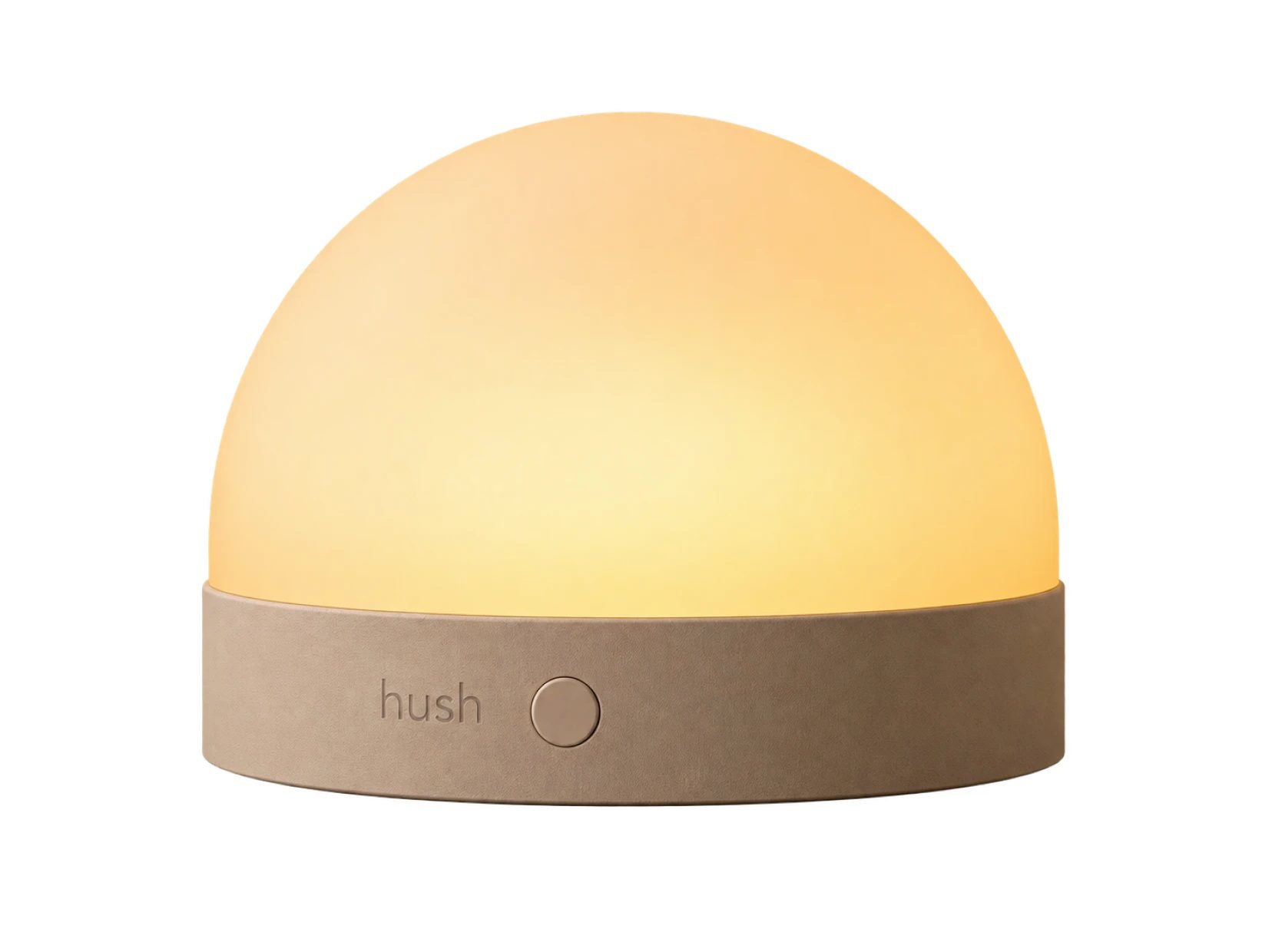
One master packshot became a written spec and a 4-image reference library. Every prompt carries the spec word for word, and every output is scored against it.
Hush light master packshot W ≈ 1.2 × H H 30% 1 2 3 4 5
  1. Silhouette. Frosted opal hemisphere on a flush cylindrical band; width ≈ 1.2 × height.
  2. Base band. ≈ 30% of height, same diameter, matte warm-taupe soft-touch. No screws, no seams.
  3. Wordmark. Debossed lowercase “hush”, tone-on-tone, left of centre.
  4. Button. Exactly one flush circle, ≈ 2× letter height, right of the wordmark.
  5. Glow. 2200–2400K amber, brightest lower-centre, no LED points or hotspots.
#72604F #B49A84 #E9DCCB #F9D59A #E9A858
P1Identity: lit master
P2Unlit state for daylight scenes
P3Angle reference for perspective
P4Overhead and flat-lay reference
03 · The system

Fix the product and the look. Vary only the scene.

Each prompt is three blocks. Two never change, so a winning shot can be rebuilt on demand and a new designer gets the same result on day one.

Reference

Lock P1–P4 and score them first. A drifted reference corrupts every shot after it.

Plate

Generate the scene with the product in it. Choose on composition and light only.

Repair

Product drift? Don't re-roll the scene. Mask the product and inpaint it from P1, or composite it.

Grade

One saved Hush grade across the whole series, so different sessions look like one shoot.

Score

8-point scorecard. Ship at 14/16 with every product line at 2/2. Log it.

Fixed · Product lockPRODUCT — reproduce exactly from image 1. Frosted opal hemispherical dome on a short cylindrical base band; width ≈ 1.2 × height; band ≈ 30% of height, flush seam. Matte warm-taupe base (#B49A84). Debossed lowercase "hush" wordmark, and to its right ONE flush circular button… Fixed · Hush lookSTYLE — editorial interior photograph, not a render. Warm neutrals only: oatmeal linen, limewashed plaster, light oak, stone, muted sage. No cool or saturated light. The dome is the key light at night. Image 2 = light, palette and grade reference only… Variable · Shot block (L1)SHOT — 4:5 portrait. Night, close-up on the bedside table. A relaxed adult hand reaches in from the right, index finger about to press the circular button. The wordmark stays fully visible to the left of the finger. 85mm, f/2.2, camera at base height.
Never edited, shared across the teamWritten per brief, one block per shot
04 · Lifestyle series

From the first press to the last ember.

Four moments in one night, built as a sequence. Each shot uses the previous approved frame as a continuity reference, so the room, light and grade stay one world.

L2Wind-down. Emotional context for PDP and email.
L1The ritual. One-button interaction, wordmark legible.
L3Daytime. Proves it earns its place switched off.
L4Asleep. The payoff the brief promises.
N1Held. Scroll-stopper for paid social.
D1Material and logo fidelity at macro scale.
D2Selling the quality of the light itself.
S1Studio plate. Clean silhouette for ads and PDP.
05 · Quality standard

"Looks good" isn't the bar. The brief is.

#CriterionArea
1Silhouette and proportions match P1Product
2“hush” lowercase, left of exactly one round buttonProduct
3Matte taupe base, frosted dome, warm gradient glowProduct
4Believable scale against hands and furnitureProduct
5Palette and grade match the Hush lookBrand
6Calm, quiet, nothing staged or busyBrand
7Objective reads in one second at 120 pxBrief
8Copy space and crop safety for every placementLayout

Each line is scored 0, 1 or 2. Ship at ≥ 14/16, with all four product lines at 2.

Rejected · 12/16
  • Base band ≈ 22% of height (spec 30%)
  • Wordmark + button pushed right of centre
  • Two AI repair passes kept the error: the hand from the right pulled the button toward the finger
Shipped · 15/16
  • Shot re-planned: hand enters from the left, where the button really is
  • Product back on spec with P1 as the only product reference
  • Base colour fix + Hush finish
2.2Generations per shipped image (29 for 13)
11/13Shots shipped from their first generation
2Failed AI repairs before one shot was re-planned
~450Credits for the full set, both models
06 · Post-production

Generation gets it close. Photoshop makes it a set.

Each shot comes out of a different session with slightly different light. One scripted Photoshop stack, applied as editable layers, makes twelve generations look like one shoot. Drag to compare.

RawFinished
H1Both models rendered the glow cream-white and the base grey. The finish restores the 2200K amber and taupe from the spec, adds light spill on the oak and grain.
RawFinished
L1Base restored from grey to spec taupe with a masked colour layer; light spill on the oak; Hush finish.
RawFinished
N1Glow moved from cream-white to the packshot amber; base colour masked back to taupe; deeper vignette for the feed.

The Hush finish stack

Scripted, so every designer gets the same named layers in one click. Values are tuned per shot, never rebuilt.

  1. GrainOverlay · 45%
  2. VignetteMultiply · 30%
  3. Light spillColor Dodge · painted
  4. Warm vibranceVibrance +12
  5. Hush colourColor Balance · split tone
  6. Hush toneCurves · soft S
  7. Product fixesMasked base colour
  8. GenerationNano Banana Pro / GPT Image
07 · In the layout

An image is finished when it works in the page.

Every shot was planned for the surfaces it ships to: a focal point that survives the mobile crop, copy space that keeps type legible, and a silhouette that still reads at thumbnail size.

hush.example
copy-safe · 42%
The new light for tinnitus.

Warm light and soft sound that help quiet the ringing at night.

Shop Hush · $129
The new light for tinnitus.

Warm light and soft sound that help quiet the ringing at night.

Shop Hush · $129

One generation, two crops. The product sits at 62% of the width, so a 4:5 mobile crop centred there keeps it whole. On mobile the headline moves below the image instead of over it, because the narrow crop leaves no calm wall to hold type.

Thumbnail test

Before shipping, every hero candidate is checked at real ad and listing sizes. If the dome stops reading as one shape, it fails line 7.

120px
72px
120px
72px
120px
72px
08 · Team playbook

Rules any designer can pick up on day one.

The second goal: a standard the whole team can produce to, not just one specialist.

  1. Never edit the fixed blocks.Change the product spec once, centrally, and re-score the reference library.
  2. References go in a fixed order.Product first, style second, continuity third. Order changes what the model treats as truth.
  3. Repair the product, keep the scene.A good plate with a drifted product is two minutes of inpainting, not ten more generations.
  4. One change per edit turn.Multi-change edits drift. Small, named steps can be reproduced.
  5. Prompt for the layout, not the frame.Name the copy space, focal point and safe zones in the shot block before generating.
  6. Log every shipped image.Tool, references, attempts, repairs, score. The log is how a winning shot gets rebuilt next quarter.